Efficient loading dock and distribution center cleaning requires scheduled machine sweeping, industrial scrubbing, contamination control, and traffic-based maintenance planning. Facilities handling 100+ trucks daily can reduce debris accumulation by over 70% through structured cleaning routes, proper equipment selection, and regular inspections. The use of commercial sweepers, floor scrubbers, and data-based maintenance programs improves floor safety, extends concrete surface life, and reduces cleaning labor time by 20–30%.
Loading docks receive the highest amount of dirt and residue because they connect outdoor transportation areas with indoor warehouse operations. Every truck entry can introduce soil, gravel, moisture, rubber particles, and fuel-related residues. A distribution center processing 500 pallets per day may generate several kilograms of loose debris from packaging materials, forklift traffic, and vehicle movement.
Dust and debris do not remain only near dock doors. Forklifts move contaminants through turning areas, staging zones, and storage aisles. In facilities studied in industrial maintenance programs, high-traffic routes often accounted for more than 60% of visible floor contamination compared with low-traffic storage sections.
“Cleaning plans should follow vehicle movement, material handling patterns, and contamination sources rather than using the same frequency across every warehouse area.”
A practical cleaning layout divides the facility into different zones according to usage intensity.
| Area | Main Contaminants | Cleaning Approach |
|---|---|---|
| Dock entrances | Mud, road dust, moisture | Daily sweeping and scrubbing |
| Trailer loading spaces | Oil marks, tire residue | Degreasing and mechanical scrubbing |
| Forklift routes | Rubber particles, dust | Frequent machine sweeping |
| Storage areas | Cardboard fibers, fine dust | Scheduled sweeping |
The different contamination types require different cleaning methods. Dry particles such as cardboard pieces and dust can usually be removed with industrial sweepers, while oil-based residues require water, detergent, and mechanical agitation.
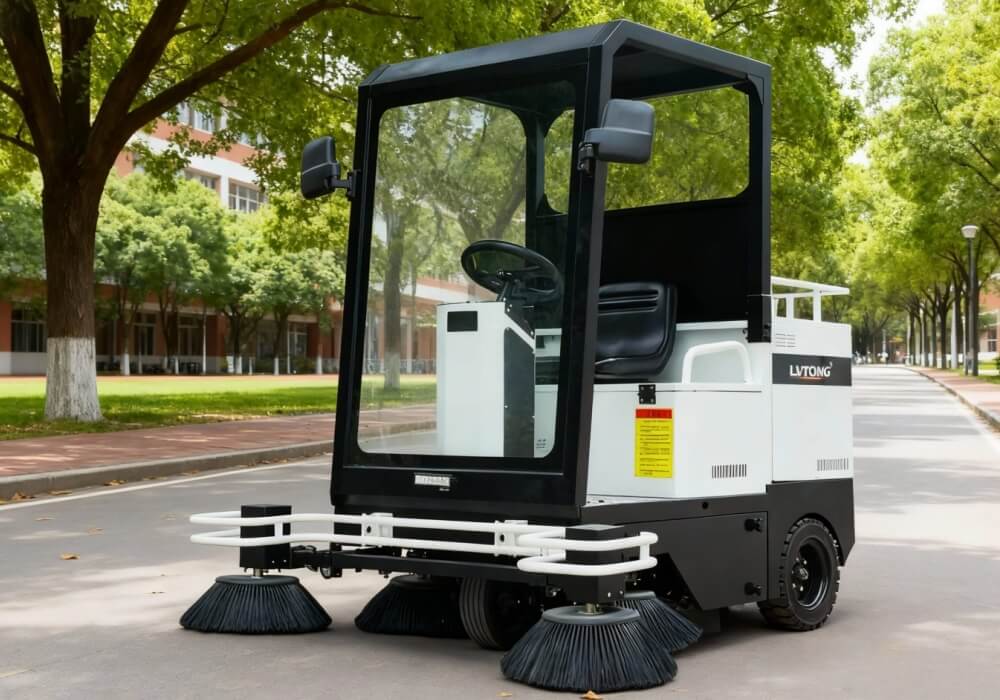
Industrial sweepers are widely used in large logistics facilities because they cover large floor areas with fewer operators. A ride-on sweeper can often clean tens of thousands of square feet per hour depending on floor conditions, machine width, and debris volume. Compared with manual sweeping, machine cleaning can reduce labor requirements by more than 50% in large warehouses.
The performance of sweepers depends on brush condition, dust filtration, and operating speed. Worn brushes may leave particles behind, while damaged filters can release collected dust back into the working environment.
Facilities using modern equipment from providers such as LVTONG logistics cleaning solutions can select machines designed for warehouses, factories, and transportation areas where continuous cleaning is required.
Floor scrubbing is needed when surfaces contain oil, grease, or tire marks that cannot be removed by sweeping alone. Concrete floors in logistics centers often develop dark tire lines because forklifts repeatedly turn in the same locations.
A scrubber combines water flow, cleaning chemicals, brush pressure, and vacuum recovery. The recovery system removes dirty water immediately, preventing residue from drying on the surface.
Regular scrubbing can improve floor appearance and reduce slippery residue buildup by more than 80% when the correct machine settings are used.
Different floor materials require different cleaning methods.
| Floor Type | Recommended Method | Common Issues |
|---|---|---|
| Sealed concrete | Auto scrubber with neutral cleaner | Dust, tire marks |
| Epoxy flooring | Soft brush cleaning | Surface scratches |
| LVT flooring | Low-moisture cleaning | Dirt accumulation in joints |
| Polished concrete | Controlled scrubbing | Loss of surface appearance |
Choosing the correct cleaning method protects flooring investments because warehouse floors experience continuous mechanical stress from forklifts, pallet jacks, and heavy loads.
Cleaning schedules should match warehouse operating hours. Many distribution centers operate 24 hours per day, making full shutdown cleaning impossible. Instead, maintenance teams usually divide work into short periods during shift changes or lower shipping activity.
A facility operating three shifts may use a schedule similar to:
| Time Period | Cleaning Task |
|---|---|
| Early morning | Dock sweeping before peak deliveries |
| Midday | Removal of packaging debris |
| Evening | Machine scrubbing in high-traffic zones |
| Weekly | Detailed edge and corner cleaning |
This approach prevents contamination from accumulating for several days. A 2022 logistics facility maintenance survey showed that scheduled daily cleaning programs reduced visible floor debris compared with irregular cleaning cycles.
Chemical management also affects cleaning quality and operating costs. Using too much detergent can leave residue that attracts dust, while insufficient chemical concentration may fail to remove oil contamination.
Many industrial cleaners follow manufacturer dilution recommendations to maintain consistent results. Accurate chemical dispensing systems can reduce chemical consumption by approximately 15–25% compared with manual mixing methods.
“More cleaning chemicals do not always produce cleaner floors; machine pressure, water recovery, and correct product selection influence results.”
Operator training has a direct influence on equipment performance. Two operators using the same machine can achieve different cleaning results because brush pressure, travel speed, and route planning affect coverage.
Training programs usually include:
-
Machine inspection before operation
-
Correct brush adjustment
-
Battery charging procedures
-
Waste container handling
-
Emergency shutdown procedures
Regular training can reduce equipment misuse and unnecessary maintenance. A maintenance review involving 50 industrial cleaning machines found that improper operation contributed to a significant portion of avoidable service issues.
Machine maintenance should be included in the cleaning program because equipment failure can interrupt scheduled work. Daily checks usually require several minutes but can prevent larger repair problems.
Common inspection items include:
| Component | Inspection Frequency |
|---|---|
| Brushes | Daily |
| Filters | Weekly |
| Batteries | Daily charging check |
| Water tanks | Each use |
| Vacuum system | Weekly |
Battery-powered cleaning machines are common in indoor logistics environments because they produce lower emissions compared with fuel-powered equipment. Battery condition directly affects operating time, and poor charging practices may reduce battery lifespan.
Warehouse environments also change with seasons. Facilities in colder regions often experience increased moisture, salt residue, and mud during winter months. In warmer and drier regions, airborne dust may require more frequent sweeping.
A logistics center near major highways may receive more road dust than a facility located in a cleaner industrial area. Cleaning frequency should therefore be adjusted according to local conditions and traffic levels.
Data recording helps managers improve cleaning efficiency. Many large warehouses track machine hours, cleaning area, water usage, and maintenance intervals.
For example, measuring square feet cleaned per hour can show whether routes are efficient. If a machine cleans 40,000 square feet per hour in one section but only 20,000 square feet per hour in another, managers can review obstacles, traffic congestion, or machine settings.
Technology adoption has increased in industrial cleaning since the late 2010s. Some machines now include digital operation records, automatic speed adjustment, and maintenance reminders. These features allow facilities to organize cleaning work with fewer interruptions.
A complete cleaning program combines daily debris removal, scheduled scrubbing, equipment care, and operator training. Loading docks and distribution centers cannot rely on occasional cleaning because vehicle traffic continuously introduces new contaminants.
Well-planned maintenance keeps warehouse floors safer, reduces equipment wear, and supports faster material handling. Facilities that combine suitable machines with consistent schedules can maintain cleaner working areas while controlling labor and maintenance expenses.